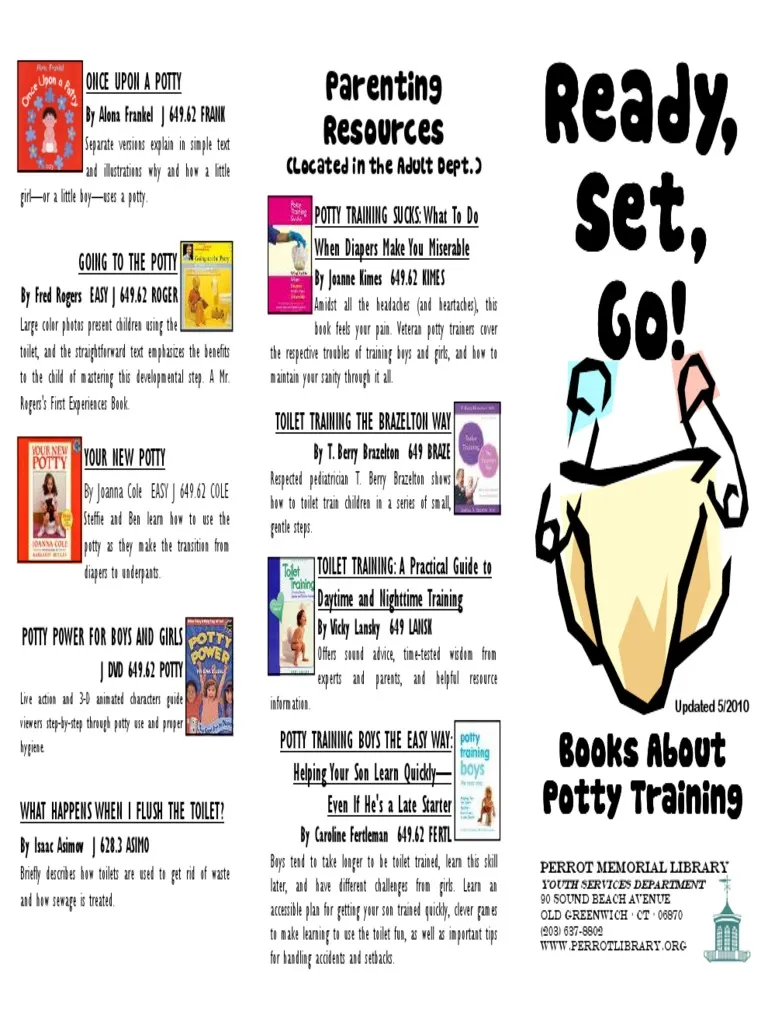
Potty Training Brochure
Potty Training Brochure - This brochure, created by the american academy of pediatrics, gives parents pointers on how to determine if a child is ready for toilet training and how to teach a child to use the toilet. It lists 10 books that offer advice on potty training for both boys and girls, explain the potty training process through simple stories and illustrations, and provide songs and entertainment to make. Begin teaching about pee, poop, and how the body works. Timing, technique and handling accidents are essential. You can start making positive associations with toileting early on. Copy a caregiver’s toileting behavior. Nighttime bladder control usually occurs later, because it. Many kids show interest in potty training by age 2, but others may not be ready until age 2 ½—or even older. Ways to help your child become ready include the following: The important thing to remember is that you cannot rush your child into using the toilet. Have a full potty seat (or junior seat that rests on the adult toilet) sitting in your bathroom and talk about how your. Potty training success hinges on physical, developmental. It has nothing to do with intelligence or laziness. Tell child that doll needs to practice going to the potty because she wet her pants. The important thing to remember is that you cannot rush your child into using the toilet. Timing, technique and handling accidents are essential. Nighttime bladder control usually occurs later, because it. Helping your child learn to use the potty or toilet is a big step for you both. Many kids show interest in potty training by age 2, but others may not be ready until age 2 ½—or even older. Potty training data sheet for instructions, see “potty training instructions” found on the apmrt website: Helping your child learn to use the potty or toilet is a big step for you both. Have child take doll to potty, pull down doll’s underpants, and sit on potty for a few seconds, pull up. Copy a caregiver’s toileting behavior. It lists 10 books that offer advice on potty training for both boys and girls, explain the potty. Potty training data sheet for instructions, see “potty training instructions” found on the apmrt website: Timing, technique and handling accidents are essential. Start teaching boys to pee sitting down until they are comfortable with knowing they have to go, getting to the potty on time, and how to go. Potty training 101 for boys avoid the spray! The important thing. Tell child that doll needs to practice going to the potty because she wet her pants. Copy a caregiver’s toileting behavior. The american academy of pediatrics has developed this brochure to help you guide your child through this important stage of social development. You can start making positive associations with toileting early on. Teaching your child to use the toilet. Begin teaching about pee, poop, and how the body works. Start teaching boys to pee sitting down until they are comfortable with knowing they have to go, getting to the potty on time, and how to go. When is a child ready for toilet training? Nighttime bladder control usually occurs later, because it. Have a full potty seat (or junior. Potty training is a major milestone and a big step for children and parents. Tell child that doll needs to practice going to the potty because she wet her pants. Have a full potty seat (or junior seat that rests on the adult toilet) sitting in your bathroom and talk about how your. Have child take doll to potty, pull. You can start making positive associations with toileting early on. This brochure, created by the american academy of pediatrics, gives parents pointers on how to determine if a child is ready for toilet training and how to teach a child to use the toilet. It lists 10 books that offer advice on potty training for both boys and girls, explain. Start teaching boys to pee sitting down until they are comfortable with knowing they have to go, getting to the potty on time, and how to go. This brochure, created by the american academy of pediatrics, gives parents pointers on how to determine if a child is ready for toilet training and how to teach a child to use the. Many kids show interest in potty training by age 2, but others may not be ready until age 2 ½—or even older. Tell child that doll needs to practice going to the potty because she wet her pants. You can start making positive associations with toileting early on. When is a child ready for toilet training? Copy a caregiver’s toileting. Explore amazon devicesdeals of the dayfast shippingshop best sellers When is a child ready for toilet training? This brochure, created by the american academy of pediatrics, gives parents pointers on how to determine if a child is ready for toilet training and how to teach a child to use the toilet. You can start making positive associations with toileting early. Helping your child learn to use the potty or toilet is a big step for you both. Many kids show interest in potty training by age 2, but others may not be ready until age 2 ½—or even older. Timing, technique and handling accidents are essential. Potty training 101 for boys avoid the spray! Most children are not ready to. Potty training is a major milestone and a big step for children and parents. This brochure, created by the american academy of pediatrics, gives parents pointers on how to determine if a child is ready for toilet training and how to teach a child to use the toilet. Have a full potty seat (or junior seat that rests on the adult toilet) sitting in your bathroom and talk about how your. Potty training success hinges on physical, developmental. The american academy of pediatrics has developed this brochure to help you guide your child through this important stage of social development. Potty training is a big for toddlers to go through, and one of the best ways to help them is to use potty training printables and charts to encourage them. Many kids show interest in potty training by age 2, but others may not be ready until age 2 ½—or even older. The important thing to remember is that you cannot rush your child into using the toilet. Start teaching boys to pee sitting down until they are comfortable with knowing they have to go, getting to the potty on time, and how to go. Toilet training is accomplished when a child uses a potty chair or toilet for bladder & bowel functions during waking hours. Potty training data sheet for instructions, see “potty training instructions” found on the apmrt website: Children learn to use the toilet independently when they are interested and motivated to do so. Develop physical skills that are critical to potty training—the ability to walk, to pull pants up and down, and to get onto/off the potty (with some help). Timing, technique and handling accidents are essential. When you decide it's time to begin potty training, set your child up for success. Nighttime bladder control usually occurs later, because it.
Potty Training in 5 Easy Steps Book by Allison Jandu Official

Ten Tips on Toilet Training Your Toddler Pamphlet Noodle Soup

Toilet Training Brochure Nutrition Matters

Ten Tips on Toilet Training Your Toddler Pamphlet Noodle Soup

Potty Training Poster Ideas
Potty Training Brochure Childhood Human Life Stages

How to Prep for Potty Training at Daycare and Preschool

Brochure 5 Potty Training

Potty Training Brochure for Parents/Preschool Teachers Parenting

Potty Party I Essential Potty Training Toolkit, Ultimate Guide for Kids
You Can Start Making Positive Associations With Toileting Early On.
Tips From Purina® Expertsqualityexplore Puppy Articlespurina Cares
When Is A Child Ready For Toilet Training?
Have Child Take Doll To Potty, Pull Down Doll’s Underpants, And Sit On Potty For A Few Seconds, Pull Up.
Related Post: